
Multi-Agency Coordination
Make unified command visible.
When an incident crosses agency lines, arriving personnel need to locate Command and Staging without guesswork, radio crosstalk, or miscommunication.
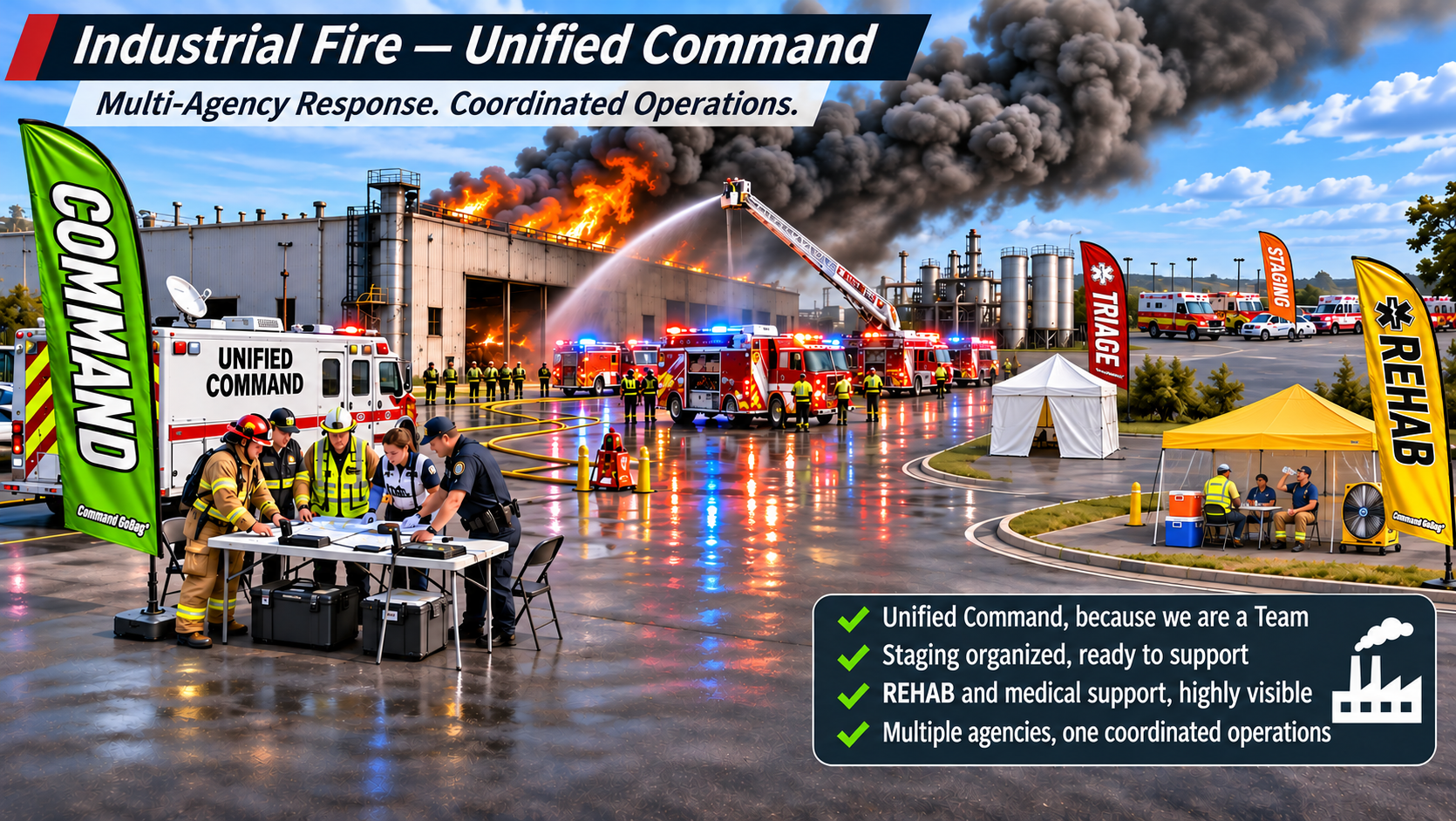
Unified Command
A structure for multi-agency, multi-jurisdictional scenes
Multiple agencies coordinate shared objectives while each retains its own authority. Visible identification makes that structure legible to every arriving person.
Shared direction
Agencies coordinate objectives while retaining their own authority and responsibility.
Disciplined resource movement
Visible staging gives mutual-aid units a clear destination before they reach the scene.
Consistent communications
Agreed location names reinforce coordinated direction for field personnel and dispatch.
Command GoBag equipment supports unified command. It does not create it, command personnel, replace incident command authority, or guarantee radio interoperability.
Command GoBag encourages frequent multi-agency, multi-jurisdictional training to build shared terminology and a common understanding of response roles and procedures.
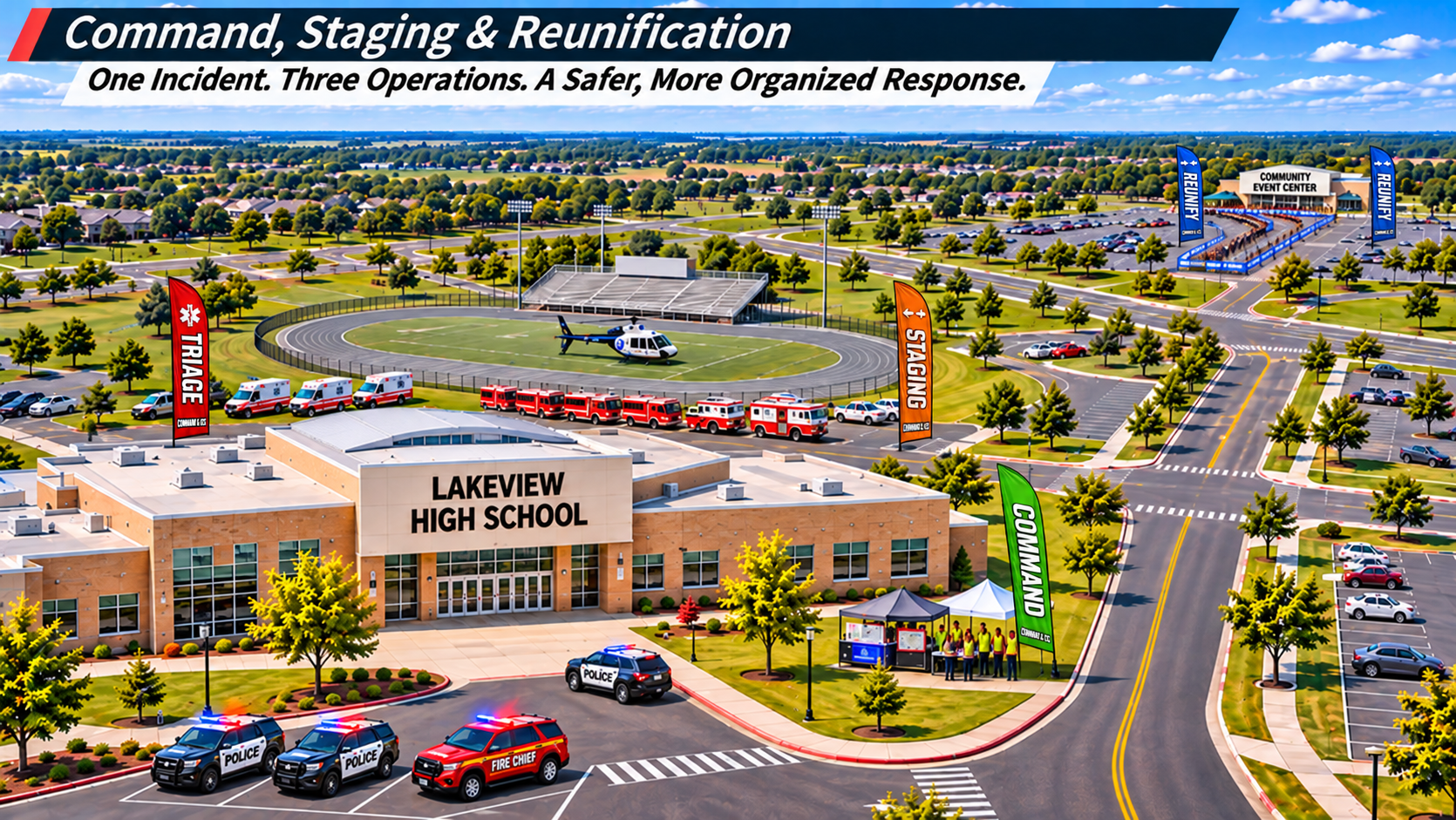
Incident scene, Command, and Staging are three distinct locations
Tactical/Rescue units are dispatched to an incident. Command may be elsewhere. Staging - where incoming units report before assignment - is typically separate from both.
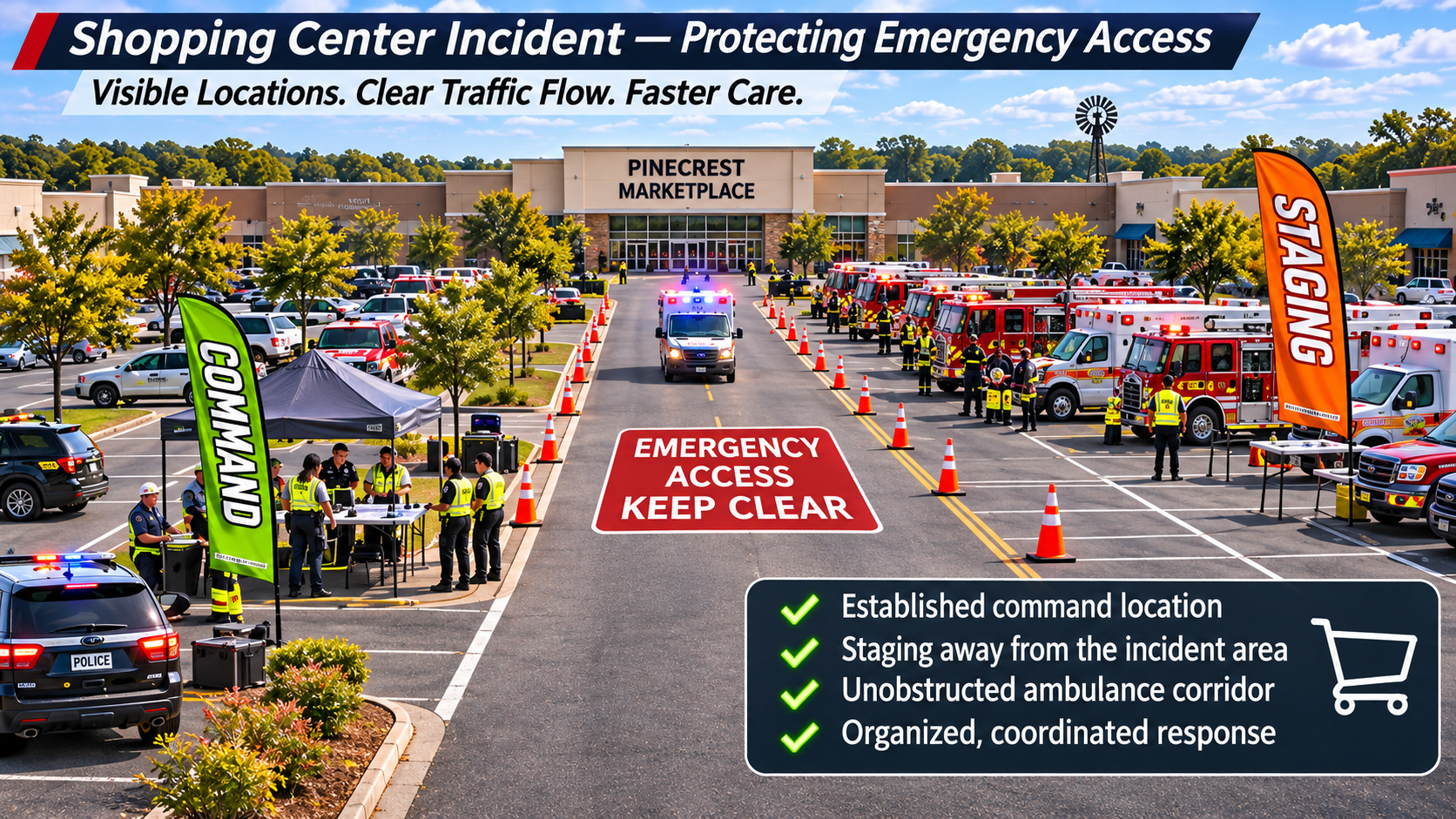
Without visible identification, arriving units can default to the incident address, congesting ingress and egress, blocking ambulance routes.
Clear access supports casualty evacuation and timely access to critical care.
Illustrative Workflow — Optional Integration
One shared reference. Clearer responder direction.
Designated locations are viewable by participating dispatchers and responders where the integration is configured. Role-based notifications follow the procedures agreed during tabletop planning.
Particularly useful in rural operations where mutual-aid units are traveling from a distance.
Command designates staging
IC identifies staging location and directs deployment.
Marker deployed; digital optional
GoBag marker deployed. Digital association optionally established.
Dispatch confirms and relays
Dispatch views confirmed location and relays to incoming units.
Responders report to staging
Incoming units check in and receive assignment. Routes stay clear.
Event & traffic wayfinding
Visible direction for planned events
The same equipment used for incident command supports entry, exit and flow management at parades, festivals and stadium events.
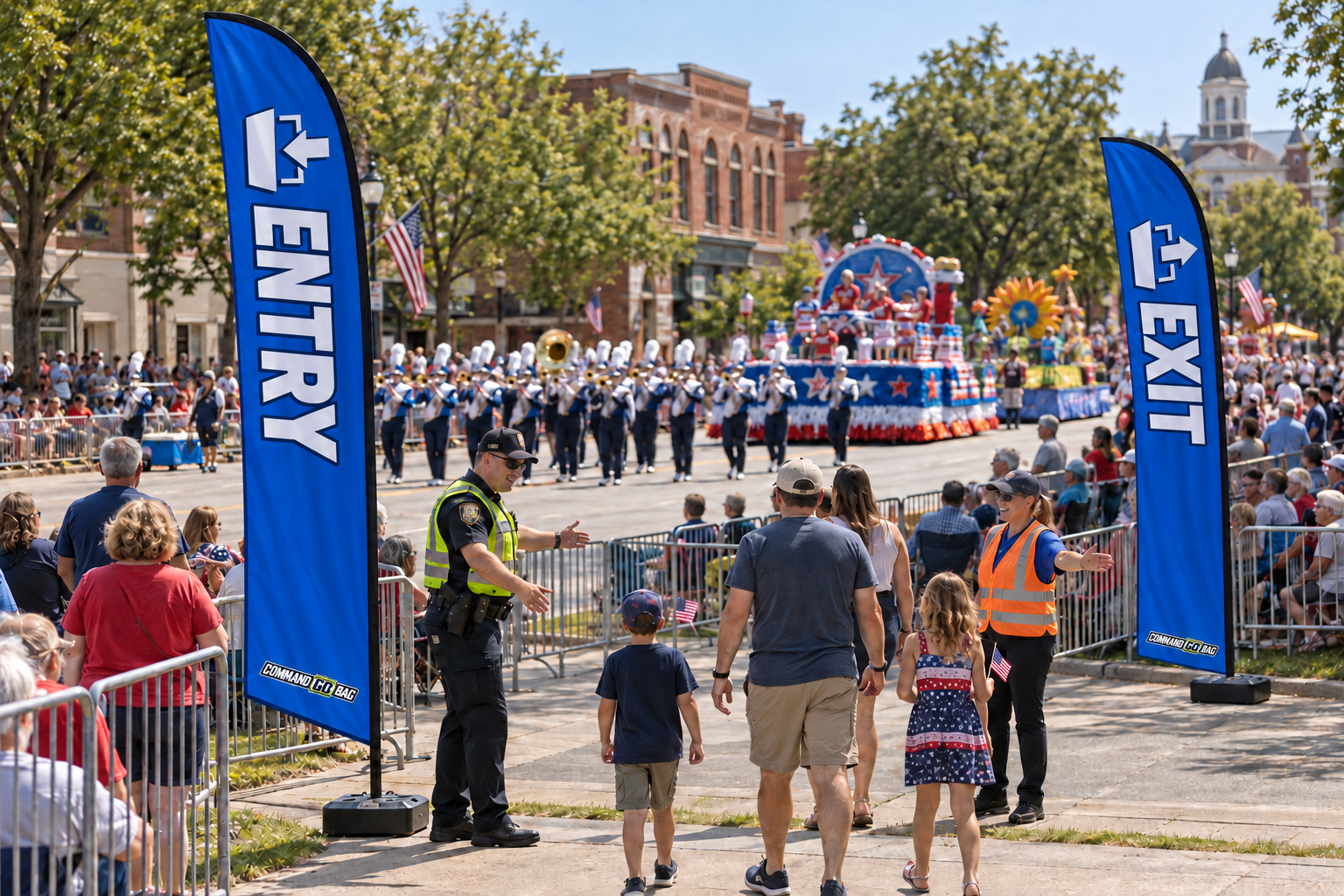

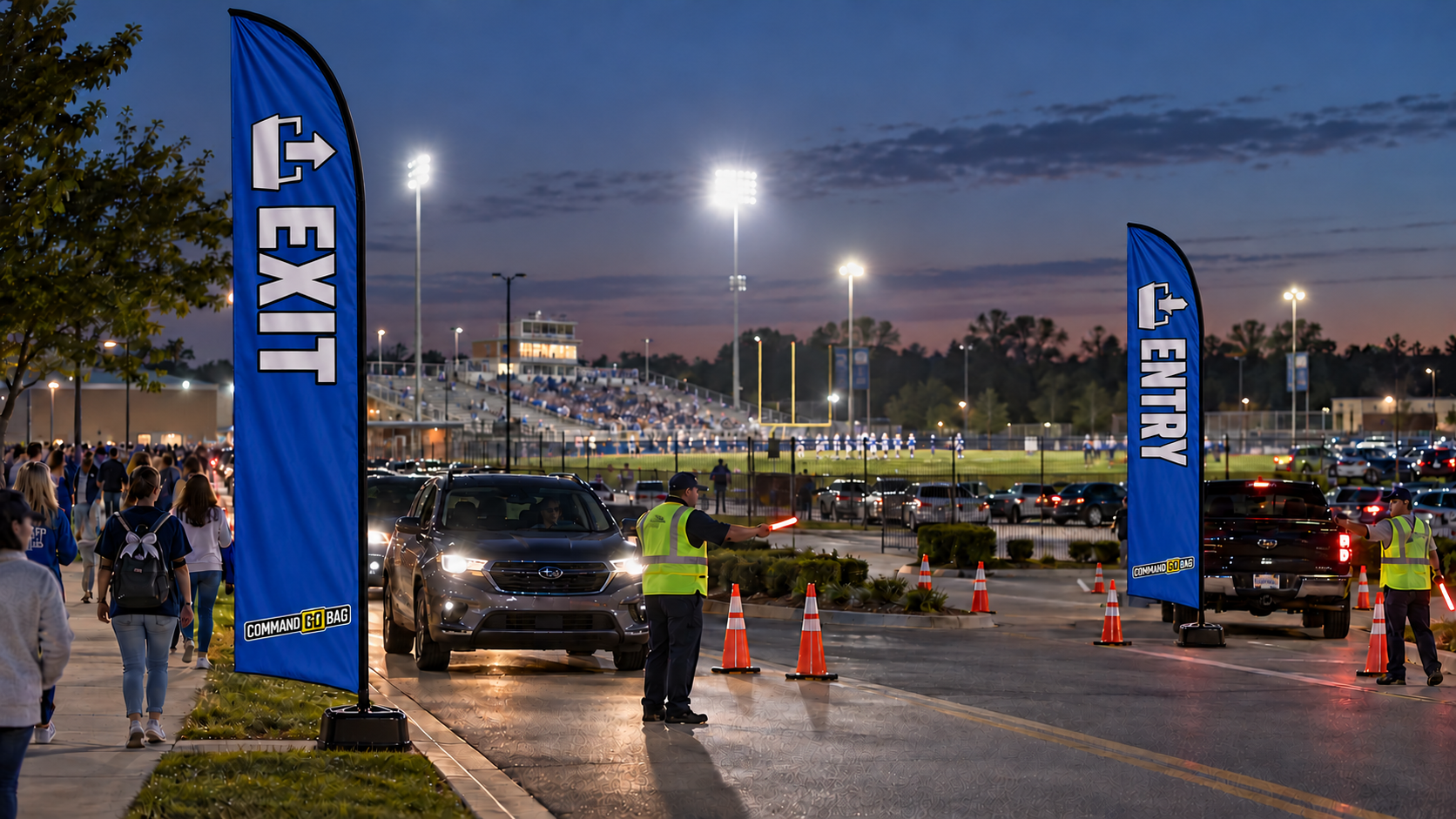
Illustrative deployment scenes. Follow your agency plan and site conditions.
Who is at the scene
Different agencies, shared operational locations
School staff and administrators
Manage students and families. Communicate reunification locations to arriving responders.
School police and resource officers
Often first law enforcement on scene. Support initial command and mutual-aid coordination.
Municipal and county law enforcement
Arriving mutual aid. Need command and staging without prior campus familiarity.
Fire and EMS
Establish staging, rehab and triage. Visible identification supports resource movement.
Emergency management
Coordinate across organizations and jurisdictions. Consistent identification supports a shared operational picture.
Dispatch
Supports coordination under incident procedures. With the optional MyFlare Alert integration, live for configured, participating teams, dispatch can view designated field locations.
Equip your multi-agency operation
Tell us about the agencies and locations involved and we will help you identify the right configuration.